Quick answer: A lotus tattoo means purity, rebirth, and strength. The lotus grows in muddy, murky water, pushes up through it, and opens clean and untouched on the surface — which is why it has become the tattoo for people who have come through something hard and refused to let it stain them. The colour changes the meaning: white for purity, pink for enlightenment, blue for wisdom, purple for spirituality, red for love. At its core, though, a lotus tattoo says: where I came from did not decide what I became.
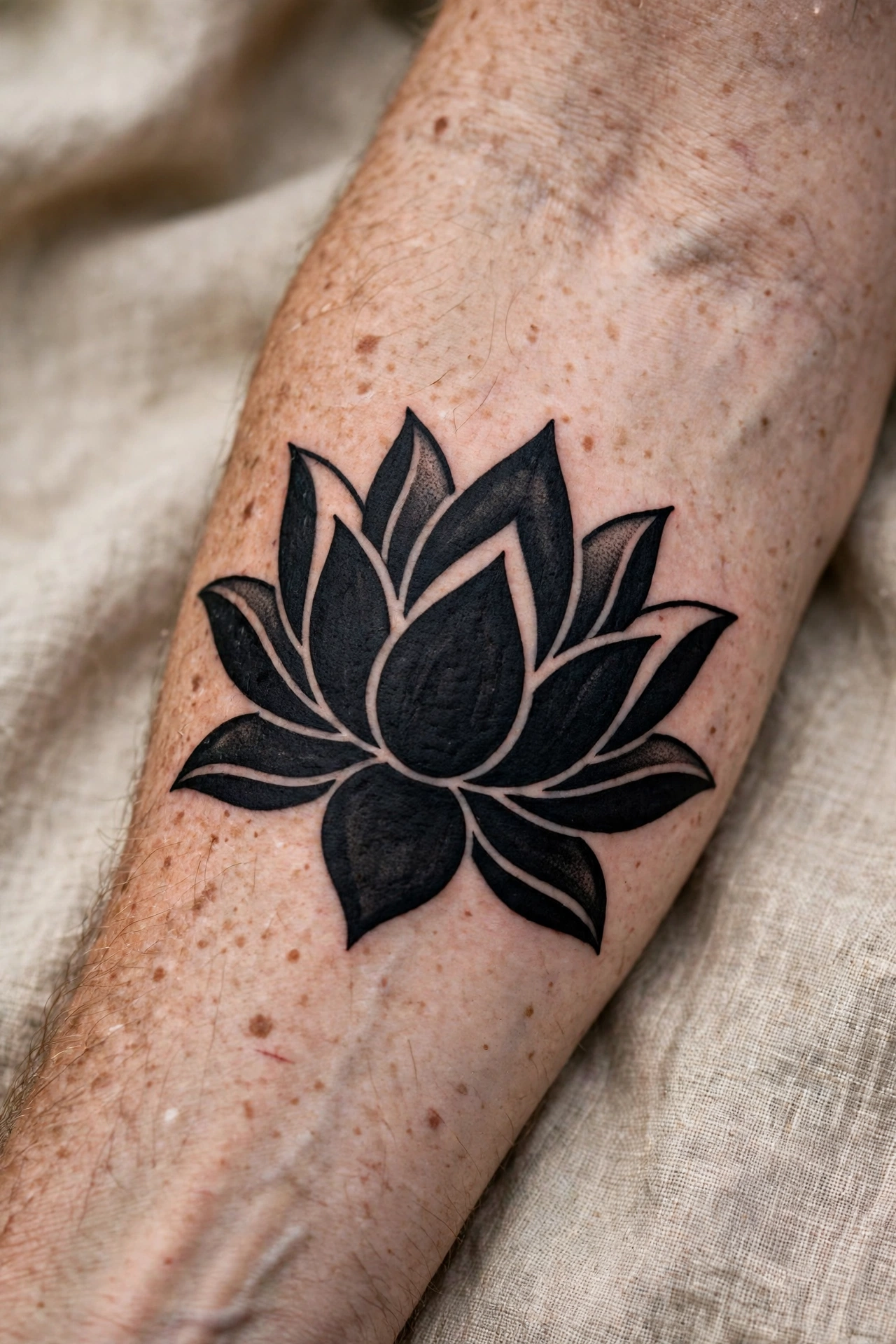
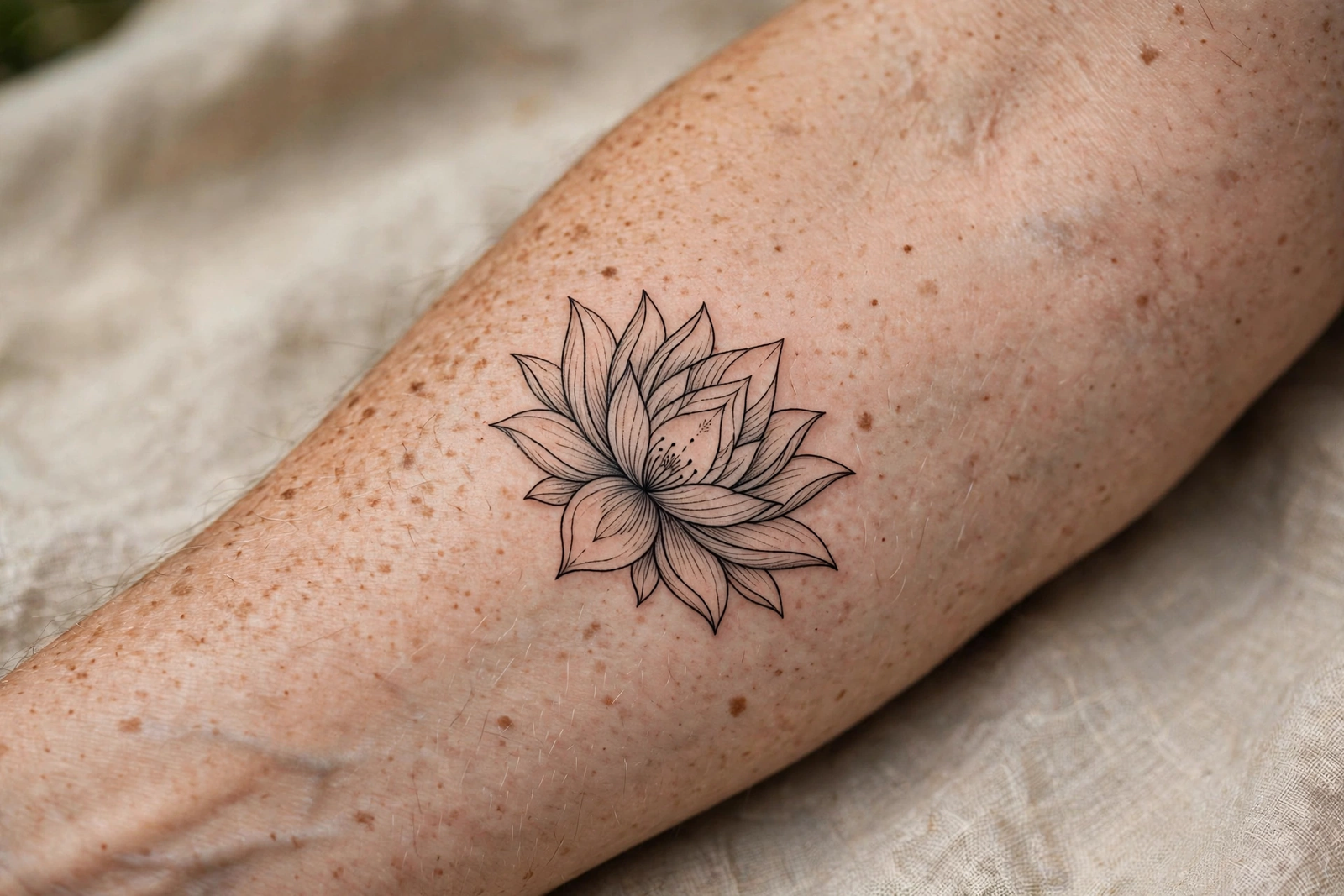
I did not get the lotus for a long time. I thought I did — it is everywhere, on yoga studio walls, on jewellery, on about half the tattoo flash sheets in existence — but I thought it was just a pretty flower, the safe choice, the one people pick when they cannot decide. Then a friend of mine got one, and she told me the story behind it, and I have never looked at a lotus the same way since. She had grown up in a house that was, to put it gently, chaotic. Nothing dramatic enough for a headline, just years of the kind of instability that makes a kid learn to be quiet and careful. She got a lotus on her forearm the week she moved into her first flat of her own, with a key in her pocket that was actually hers. Not a big, showy piece. A small, clean lotus, black ink, no colour at all. “Mud,” she said, tapping the skin below it, “and then this.” She did not need to explain the rest. That is the lotus in one sentence, really: mud, and then this.
So here is the full guide, the way we would talk you through it in a studio: what a lotus tattoo means, why the colour matters so much, what Buddhism, Hinduism and Egypt have each said about this flower, the designs people actually get — including the unalome, the mandala, the lotus with a koi — where to put one, what it costs, what it feels like, and how to pick a version that is not just a copy of someone else’s Pinterest board. Because the lotus is popular, and popularity is a risk. The difference between a lotus tattoo that means something and one that is just decoration is almost entirely in the choices you make before the needle ever touches skin.
What Does a Lotus Tattoo Mean?
Every meaning of the lotus starts with the same botanical fact, and it is worth pausing on it because it is genuinely remarkable. A lotus does not grow in clear water. It grows in mud. Its roots are anchored in the murk at the bottom of a pond, its stem pushes up through water you would not want to drink, and its flower opens on the surface, dry and spotless. Water literally rolls off its petals. Scientists call it the lotus effect, and it is real: the petal surface is structured so dirt cannot stick. So when people say a lotus means purity, they do not mean purity as in “never touched by anything difficult.” They mean purity as in “touched by all of it, and still clean.” That distinction matters, and it is the reason the lotus resonates with people who have actually been through something, rather than people who are just fond of flowers.
1. Purity: clean, not sheltered
This is the meaning most people start with, and it is the one most often misunderstood. A lotus tattoo does not say “I have lived a pure life.” Nobody has, and a tattoo that claimed otherwise would be embarrassing within a year. It says something more interesting: that you can come out of a messy, complicated, even ugly situation without carrying it on you forever. I think of the friend with the flat key. She did not pretend her childhood had not happened. She just refused to wear it as a stain. A white lotus, especially, carries this reading — purity of mind, of intention, of the decision to be better than your circumstances. It is aspirational, not a boast.
2. Rebirth and new beginnings
A lotus closes at night and sinks below the water, then rises and opens again every morning. Every single day, a small rebirth, on schedule. That daily cycle is why the lotus is tied to rebirth in Buddhism and Egypt alike, and why it is such a popular tattoo after a fresh start: a new job, a new city, a recovery, a relationship that ended and a life that had to be rebuilt from the furniture up. There is something reassuring about a symbol that does not promise a single dramatic rebirth, like a phoenix exploding into flame, but a quiet one that happens again tomorrow, and the day after that. If your new beginning feels less like fireworks and more like getting up and trying again, a lotus might be more honest than a phoenix.
3. Strength and resilience
People forget how tough a lotus is. It pushes through mud, it survives in water that would kill a more delicate flower, and it comes back year after year. Strength is not the first word most people associate with a flower tattoo, which is exactly why it works here. A lotus tattoo can be a quiet kind of strength — not the flexing, shouting kind, but the kind that gets up, makes breakfast, goes to work, and keeps going. I have heard it described by people after illness, after grief, after years of caregiving that nobody thanked them for. They did not want a lion. They wanted something that said: I endured, and I am still blooming. A lotus says that without raising its voice.
4. Enlightenment and spiritual growth
In Buddhist tradition, the lotus is the flower of enlightenment itself. The Buddha is often shown seated on a lotus, and the fully bloomed lotus represents a mind that has opened completely. Different stages of the flower represent different stages of the path: a closed bud is a person at the start, a partially open flower is someone on the way, a fully open flower is enlightenment. That gives a lotus tattoo a lovely built-in subtlety — you can choose a bud, a half-open bloom, or a full flower, and each one says something different about where you think you are. And honestly, choosing a bud is a brave, honest tattoo. It says: I am not finished. I am still opening.
Lotus Colours: The Meaning Changes With the Petals
If there is one thing to get right about a lotus tattoo, it is the colour, because in lotus symbolism colour is not decoration. It is the message. A pink lotus and a blue lotus are not the same tattoo in different colours; they are different tattoos that happen to share a shape. Here is the traditional breakdown, with the honest caveat that meanings vary a little between traditions — if a colour means something specific in your own practice, trust that over any general guide, including this one.
White lotus: purity, peace, spiritual perfection
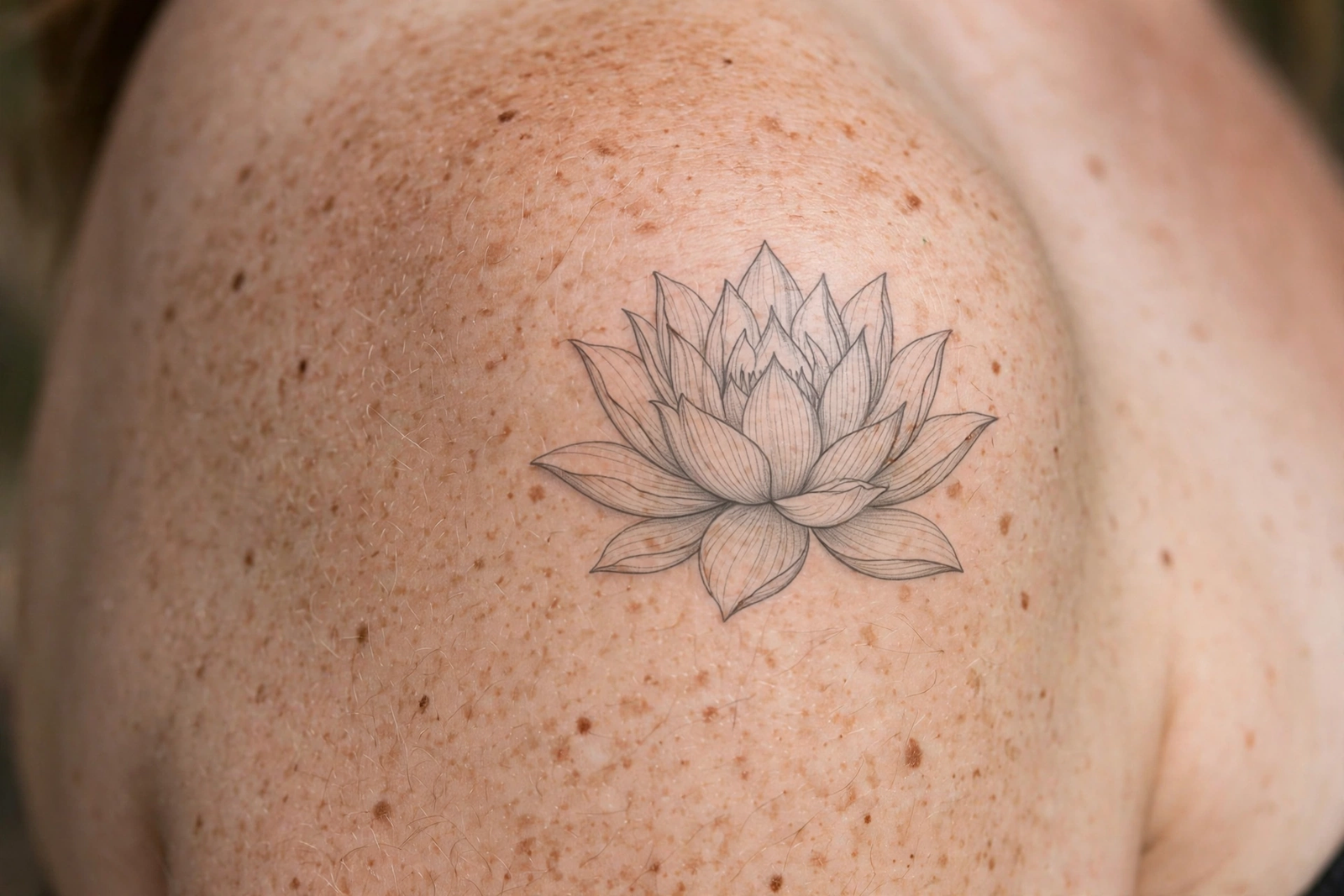
The white lotus is the purest version of the flower: purity of mind and spirit, peace, and the perfection of the spiritual path. It is the lotus most associated with the Buddha, and it is a popular choice for people marking a decision to live more deliberately — calmer, kinder, less reactive. In tattoo form, white ink is tricky, so most “white” lotus tattoos are actually black fine-line or soft grey shading that reads as white. Talk to your artist about this honestly. Real white ink fades and yellows in ways people do not expect, and a good artist will steer you toward a design that will still look like a white lotus in five years.
Pink lotus: enlightenment, devotion, the Buddha
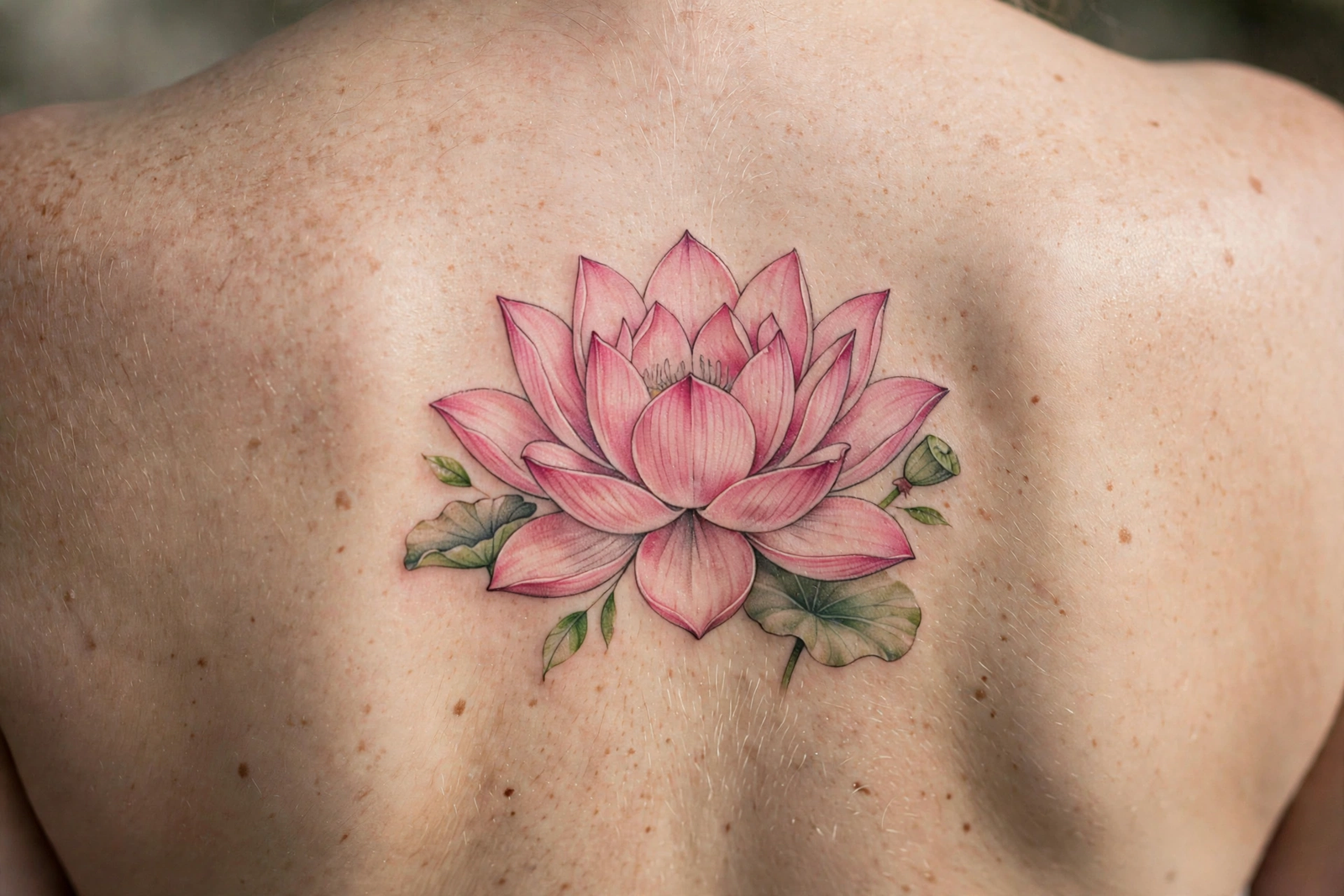
Pink is the classic lotus colour, and the most traditional. The pink lotus is the Buddha’s flower, representing enlightenment, devotion and the highest spiritual aspiration. It is also, simply, the most recognisable lotus — when most people picture a lotus, they picture pink. A pink lotus tattoo is a warm, open choice: it says growth, devotion and a heart that is opening. It also photographs beautifully, which is a shallow reason and a real one. You will look at this tattoo every day. Liking how it looks is not vanity; it is part of the point.
Blue lotus: wisdom, knowledge, self-control
The blue lotus is rarer in nature and rarer in tattoos, which makes it a distinctive choice. Traditionally it represents wisdom, knowledge and mastery over the senses — the mind, in control of itself, rather than dragged around by every impulse. A blue lotus tattoo suits people who value learning, who have worked on discipline, or who have a relationship with knowledge that is personal rather than academic. It is also, I think, the most underrated lotus colour. A deep blue lotus with gold accents, done well, is genuinely stunning, and it stands out in a sea of pink.
Purple lotus: spirituality, mysticism, the inner path
Purple is the colour of mysticism and the esoteric path — spirituality that is personal, interior, not necessarily tied to a temple or a tradition. A purple lotus tattoo often marks a spiritual journey that does not fit neatly into a label: meditation without a religion, a sense of the sacred that is private, a path you are walking mostly alone. It is a good choice if the spiritual side of the lotus is what draws you, but you do not want to claim a tradition you do not belong to.
Red lotus: love, passion, compassion
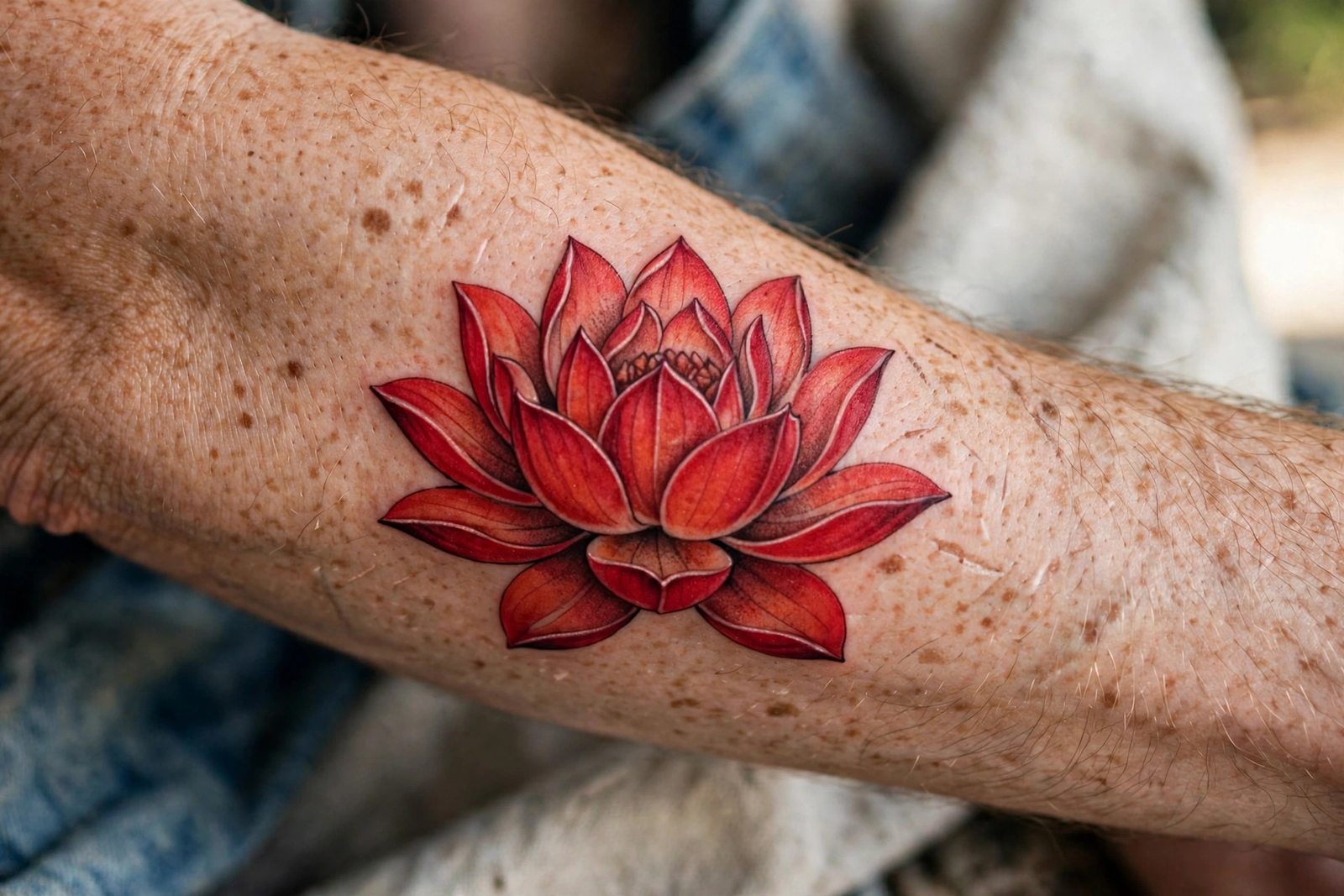
The red lotus is the flower of the heart: love, passion and compassion. In Buddhist tradition it represents the original nature of the heart, and Avalokitesvara, the embodiment of compassion, is associated with it. A red lotus tattoo can be romantic — love for a partner, for a child, for a family — or it can be about compassion as a practice: choosing, daily, to be kind in a world that does not always reward it. It is a warm, bold colour, and it suits people who want their lotus to feel alive rather than serene.
Black lotus: mystery, grief, rebellion, letting go
Black lotuses do not exist in nature, which is part of their appeal. A black lotus tattoo — usually blackwork, often with dark shading — leans into mystery, grief, or a deliberate break with the traditional meanings. Some people choose it after a loss, as a flower for a chapter that did not end happily. Others choose it simply because they like the look, and they are tired of being told flowers have to be pink. Both are valid. Just know that a black lotus reads differently to other people than a pink one does, and if you want the traditional purity meaning, black will confuse the message. If you want mystery, it is perfect.
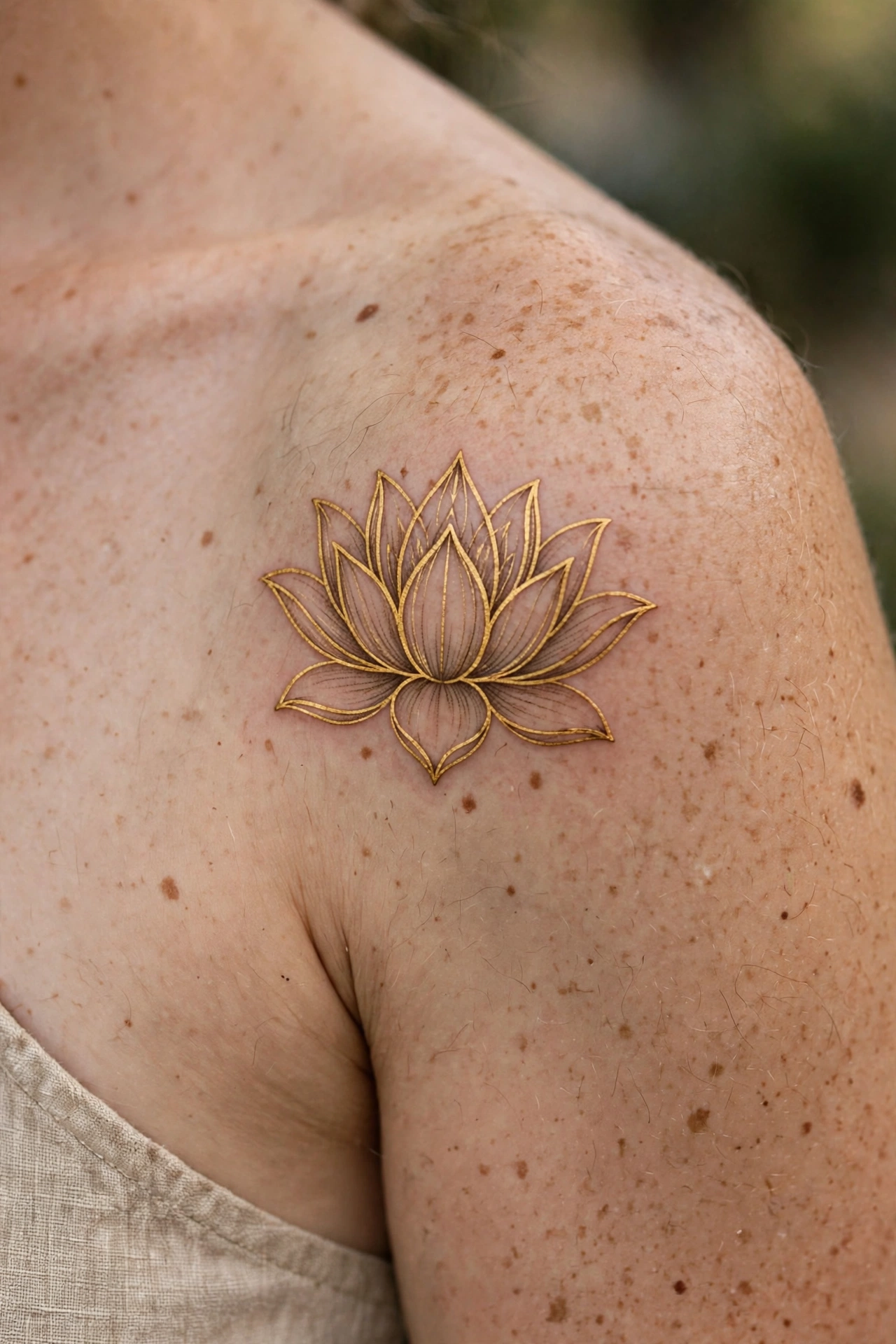
Gold lotus: prosperity, achievement, the fully realised self
Lotus Meanings Around the World
Buddhism: enlightenment rising from suffering
In Buddhism, the lotus is the central flower, and its meaning is the whole path in miniature. The mud is suffering, the stem pushing through the water is the journey, and the flower opening on the surface is enlightenment. The Buddha’s feet are lotuses, his throne is a lotus, and the mantra “Om Mani Padme Hum” — the jewel in the lotus — is one of the most repeated phrases in the world. A lotus tattoo in this tradition is not just pretty; it is a statement of intent about how you want to live. If Buddhism is your own practice, the details matter — the number of petals, the stage of bloom, the colour — and it is worth talking them through with someone who knows the tradition, not just an artist who likes the shape.
Hinduism: creation, beauty and the divine
In Hindu tradition, the lotus is everywhere, and it is sacred. Brahma, the creator, emerges from a lotus growing from Vishnu’s navel. Lakshmi, goddess of wealth and fortune, sits on a lotus and holds lotuses. Saraswati, goddess of knowledge and art, sits on one too. The lotus here means divine beauty, fertility, prosperity and spiritual purity, and it is associated with the gods themselves, not just with human aspiration. A Hindu-inspired lotus tattoo carries that weight — it is not just a personal symbol, it is a flower the divine sits on. If this is your tradition, wear it with the respect it deserves. If it is not, be thoughtful about borrowing a sacred symbol, and get the details right.
Ancient Egypt: rebirth, the sun and creation
The Egyptians loved the lotus for a beautifully literal reason: it closed at night, sank, and rose again with the sun every morning. To a culture obsessed with the sun’s daily journey and with rebirth after death, that was not a metaphor. It was evidence. The lotus became a symbol of creation, rebirth and the sun itself, and it appears all over Egyptian art, from temple columns shaped like lotus bundles to jewellery and funerary pieces. An Egyptian-style lotus tattoo — clean, stylised, often in gold and blue — carries that ancient, solar weight. It is rebirth as a daily fact, not a one-time miracle.
China and Japan: harmony, purity and longevity
In China, the lotus is a symbol of purity, harmony and marital happiness — a flower that stays clean in muddy water is a natural emblem for a person of integrity, and for a marriage that stays good through hard times. Confucian tradition praised it for exactly that: rooted in mud, unstained by it. In Japan, the lotus carries similar purity meanings, with an added association with the Buddhist paradise and with the transient beauty of life. Japanese-style lotus tattoos, often part of larger pieces with water and koi, lean into that flowing, naturalistic tradition, and they are beautiful at large scale.
Lotus Tattoo Designs That Work
A lotus on its own is already a complete tattoo. That is rare, and it is part of the flower’s appeal — you do not need to add anything for it to mean something. But the pairings and variations people choose add layers, and they are worth knowing, because each one changes the sentence your tattoo is saying. The rule of thumb is simple: the lotus is the hero. Anything you add should support it, not compete with it.
Single lotus, fine-line or blackwork
The classic, and still the best starting point. A single lotus, clean lines, either fine-line black ink or soft shading, with nothing else. It suits the forearm, the wrist, the sternum, the back of the neck, the ankle — anywhere a symmetrical flower can sit comfortably. The appeal is restraint. A single lotus does not need to explain itself, and that confidence is part of its beauty. One practical note: symmetry matters enormously with a single lotus. A lopsided petal is visible instantly, in a way a lopsided rose is not, because the eye expects a lotus to be balanced. Pick an artist whose linework is steady, and check their healed symmetrical work, not just their fresh photos.
Lotus and unalome: the path, drawn out
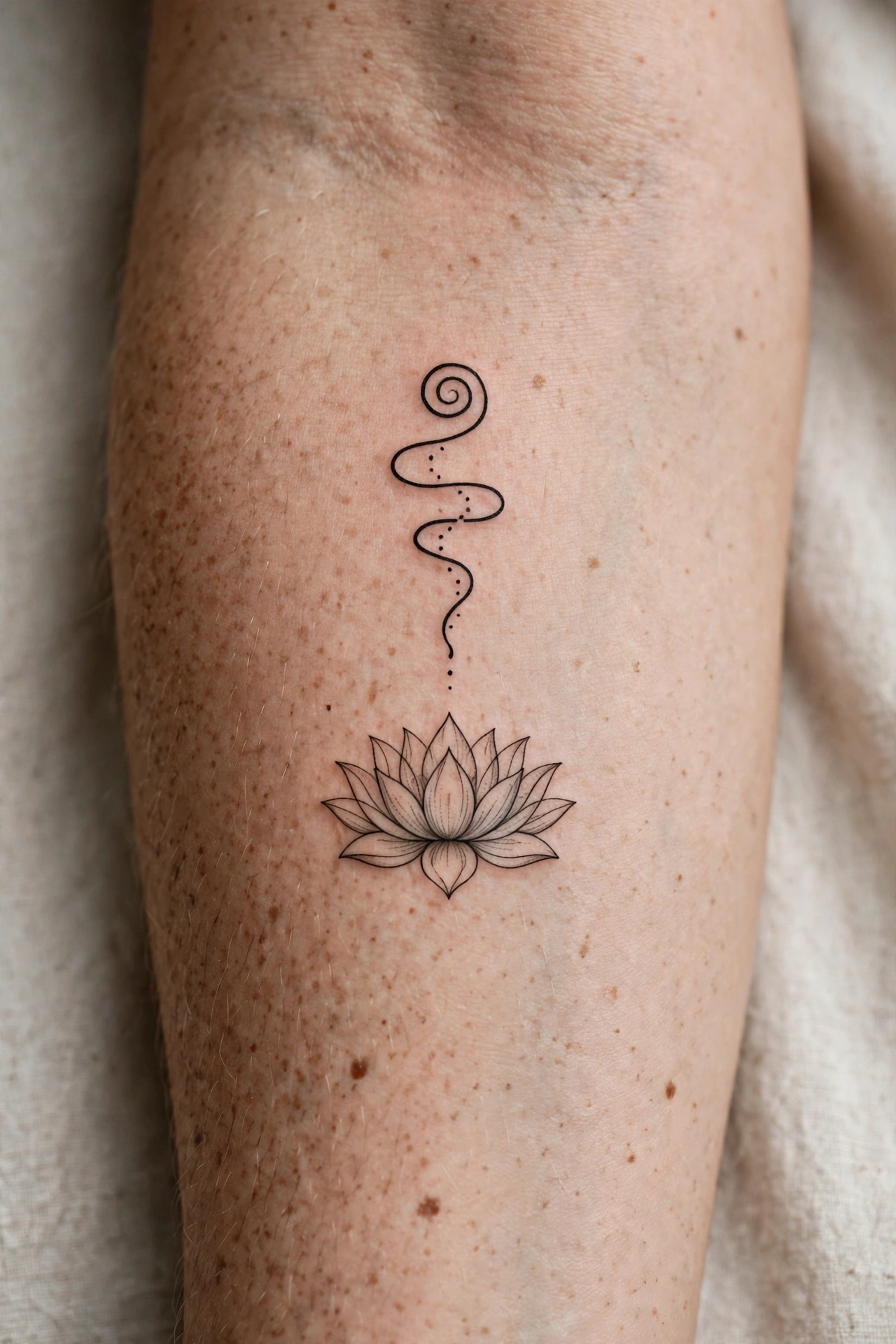
The unalome is a Buddhist symbol representing the path to enlightenment: a spiral for the confusion at the start, a winding line for the twists and setbacks, and a straight line for the clarity that comes at the end. When you put a lotus at the top of an unalome, the whole design becomes a life story in miniature — confusion, struggle, straightening out, blooming. It is one of the most meaningful lotus pairings, and one of the most popular, which means it is also one of the most copied. If you choose it, make it yours: adjust the curve, change the flower’s stage, add a small personal element. A unalome that is identical to ten thousand others on the internet is not a path. It is a printout.
Lotus mandala: geometry, calm, wholeness
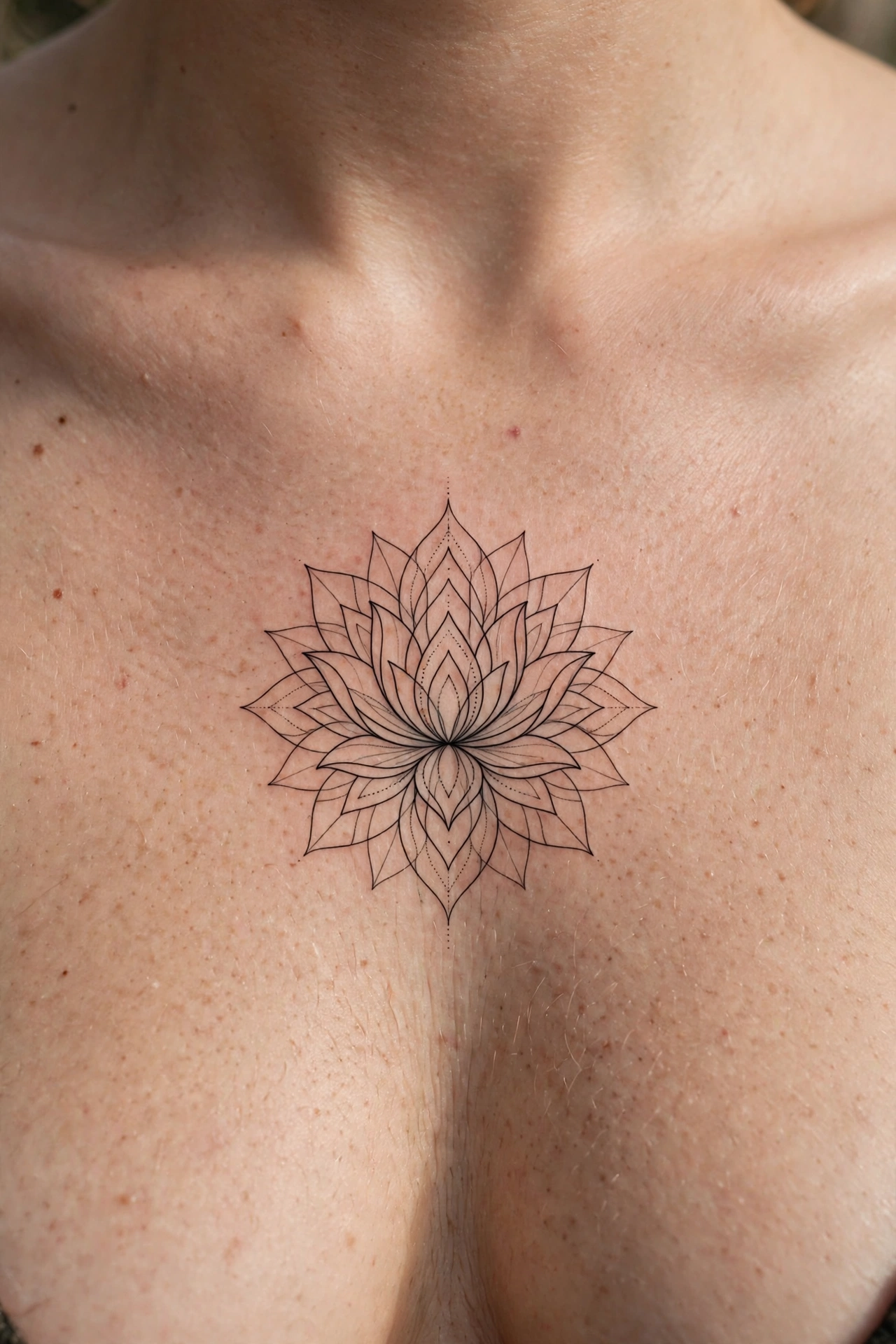
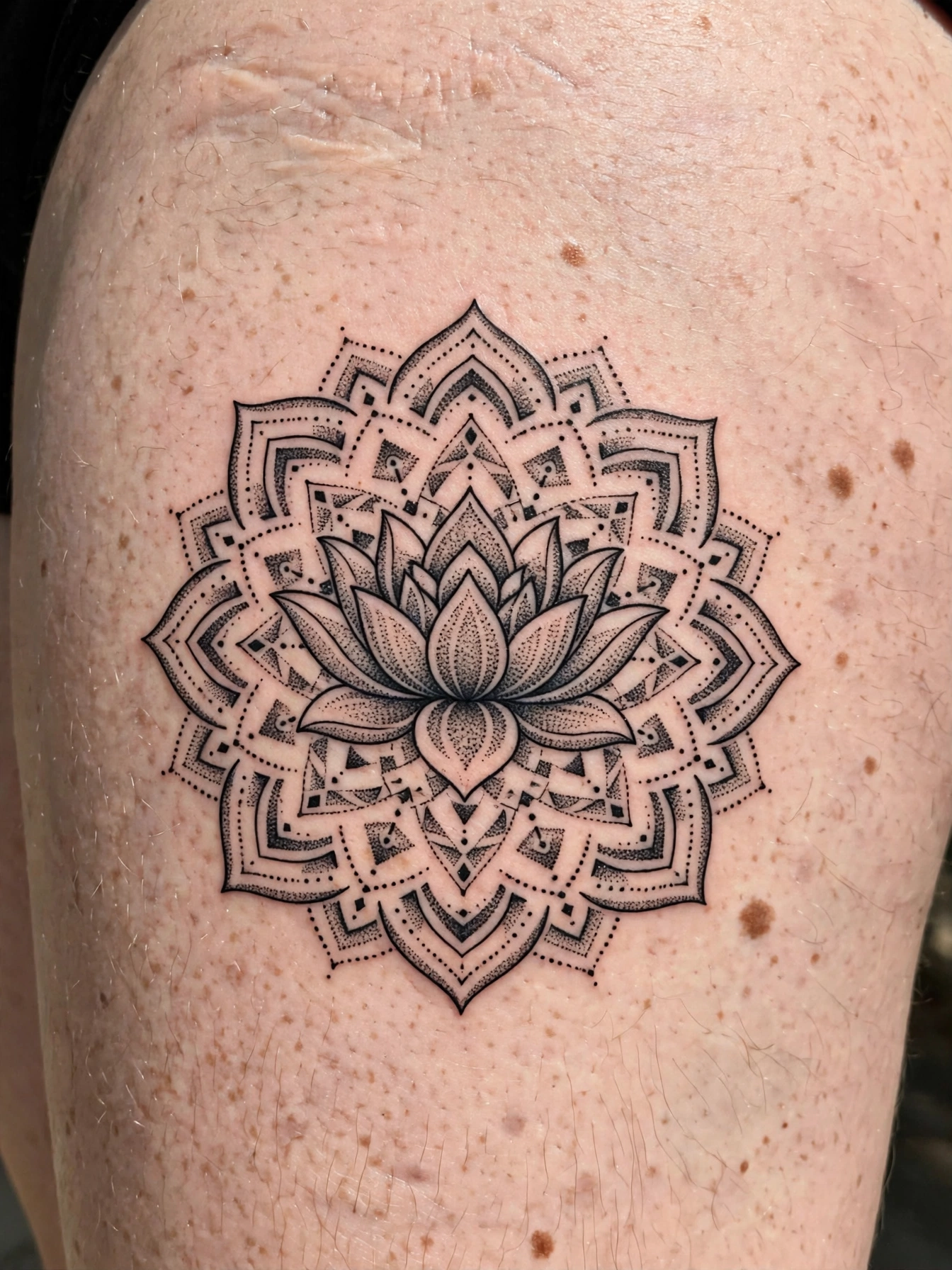
A mandala is a geometric pattern representing the universe, wholeness and the journey inward, and a lotus at its centre is a natural fit — the flower as the still point in a complex pattern. Lotus mandalas are beautiful, detailed, and meditative to look at, and they suit larger placements: the back, the thigh, the upper arm, the sternum. They also demand patience, from you and from the artist. Mandala dotwork takes hours, it takes stillness, and it takes an artist who genuinely enjoys geometry. Do not book a mandala with someone who rushes. The whole point of the design is calm, and a rushed mandala is a contradiction in ink.
Lotus and koi fish: perseverance and good fortune
In Japanese tradition, the koi swims upstream, against the current, and becomes a dragon at the top of the waterfall. Pair a koi with a lotus and you get perseverance plus purity: the struggle and the bloom, together. These pieces are usually larger, often in colour, and they suit the forearm, the thigh or the back, where the koi has room to swim and the lotus has room to open. A koi and lotus together is a story about effort — not just surviving, but swimming hard, in the right direction, for a long time.
Lotus and moon: intuition, cycles, calm
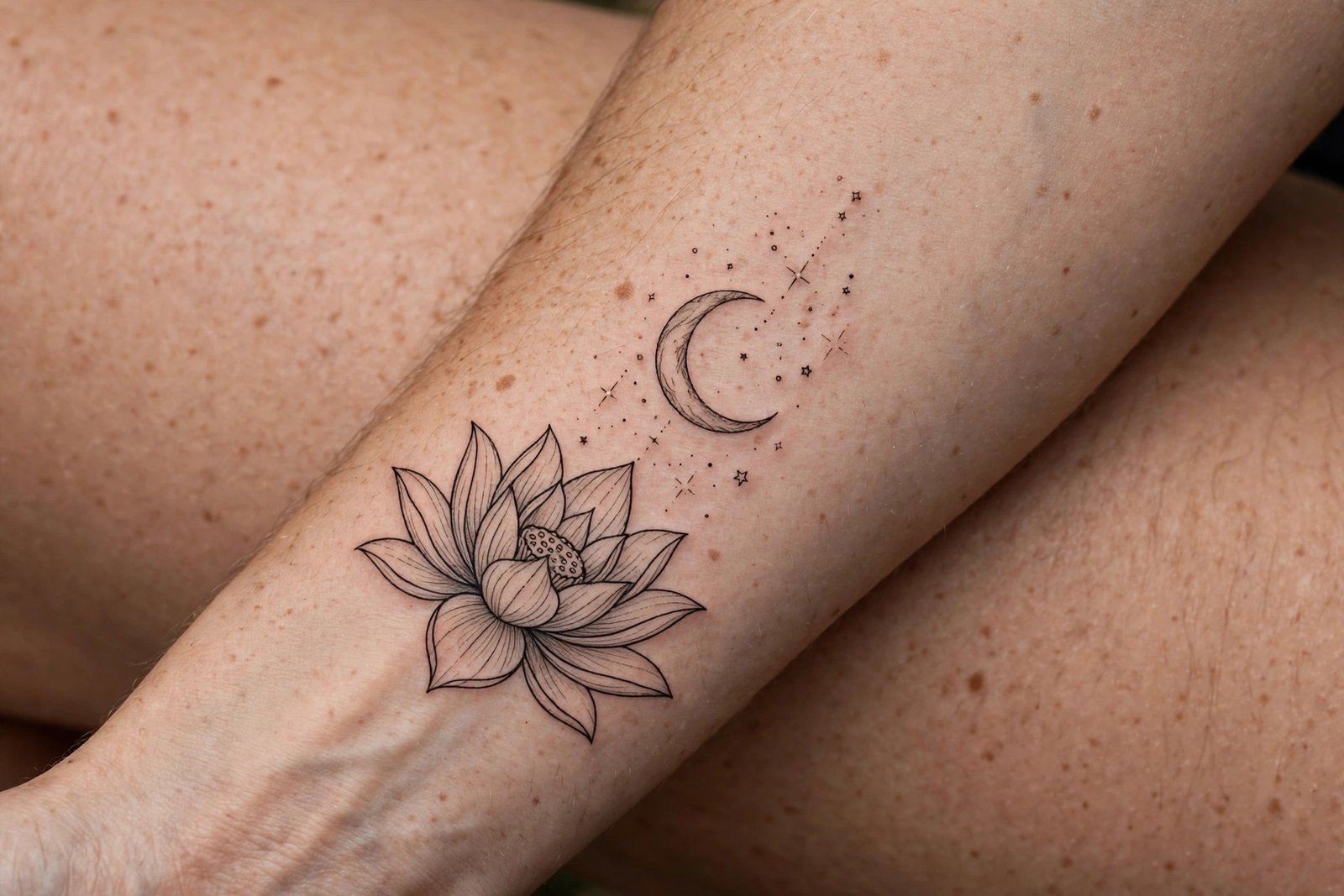
The moon brings cycles, intuition and the night, and it pairs with a lotus the way it pairs with most flowers — gently. A lotus beneath a crescent moon, or with a moon resting in its petals, leans into calm, reflection and the parts of growth that happen quietly, at night, when nobody is watching. It is a softer lotus tattoo, and it suits fine-line and dotwork styles beautifully. This is also a good pairing if you want a lotus but you do not want it to read as purely spiritual. The moon keeps it personal, not doctrinal.
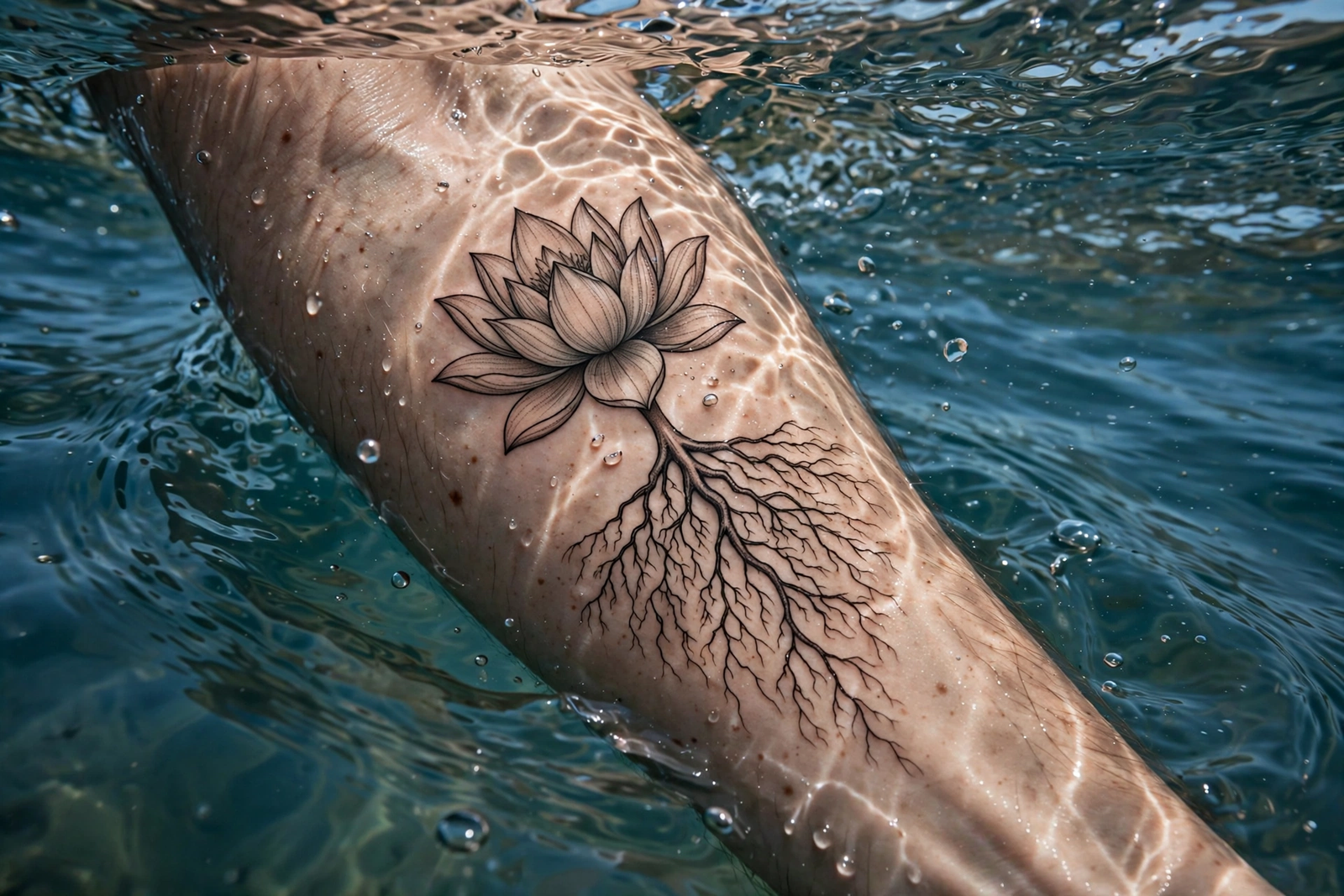
Lotus in water: roots, mud and honesty
Lotus bud, half-open, fully bloomed: stages of growth
Lotus and other flowers: layered meanings
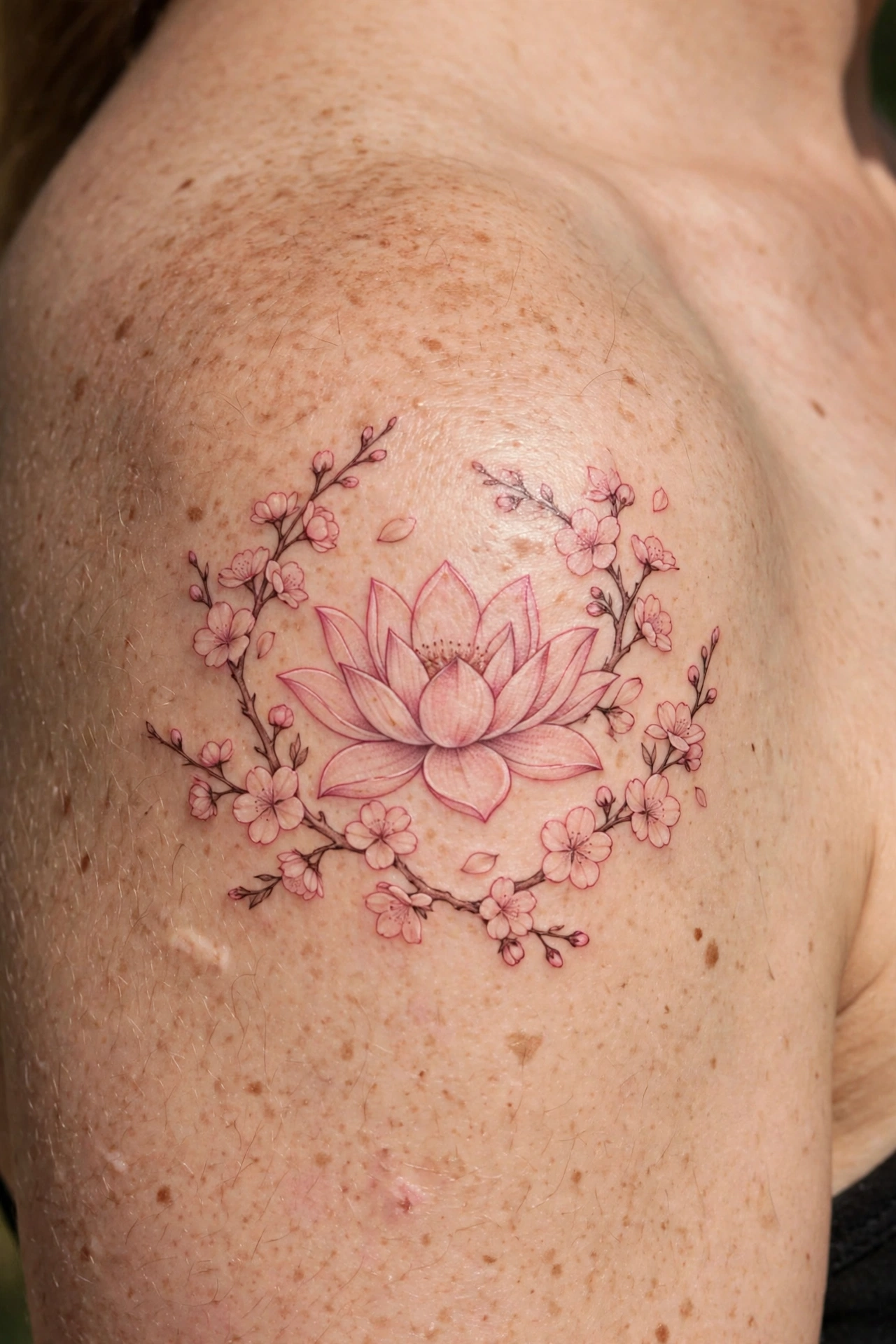
Lotuses pair well with other flowers, and each pairing adds a layer. Cherry blossoms bring fleeting beauty and the Japanese tradition. Roses bring love. Lavender brings calm. Peonies bring prosperity. A garden of flowers with a lotus at the centre says: this is not one story, it is a whole life, with many chapters, and the lotus is the one that holds them together. Just be careful about clutter. Three flowers, well spaced, is a garden. Seven flowers, crammed together, is a hedge. Give each one room.
Styles: Which Look Fits Your Lotus?
Fine-line: delicate, modern, detailed
Fine-line lotuses are the most popular style right now, and it is easy to see why. Thin lines, minimal shading, elegant and contemporary, they suit small to medium pieces on the wrist, forearm, collarbone, ribs or ankle. The trade-off, as always with fine-line, is ageing: very fine lines spread and soften over time, so a fine-line lotus needs to be a little bigger than you first imagine, and you should expect a touch-up in five to ten years. Ask to see healed fine-line work. Fresh fine-line always looks perfect. Healed fine-line tells the truth.
Blackwork and dotwork: bold, graphic, meditative
Blackwork lotuses — solid black, strong shapes, sometimes dotwork shading — are dramatic and they age well. Dotwork mandala lotuses, in particular, have a meditative quality that suits the subject: thousands of tiny dots, patiently placed, building a flower out of nothing. These styles suit larger pieces and people who want a lotus that reads clearly from across a room. The trade-off is that blackwork is unforgiving. There is nowhere to hide a wobbly line in solid black, so the artist matters more, not less.
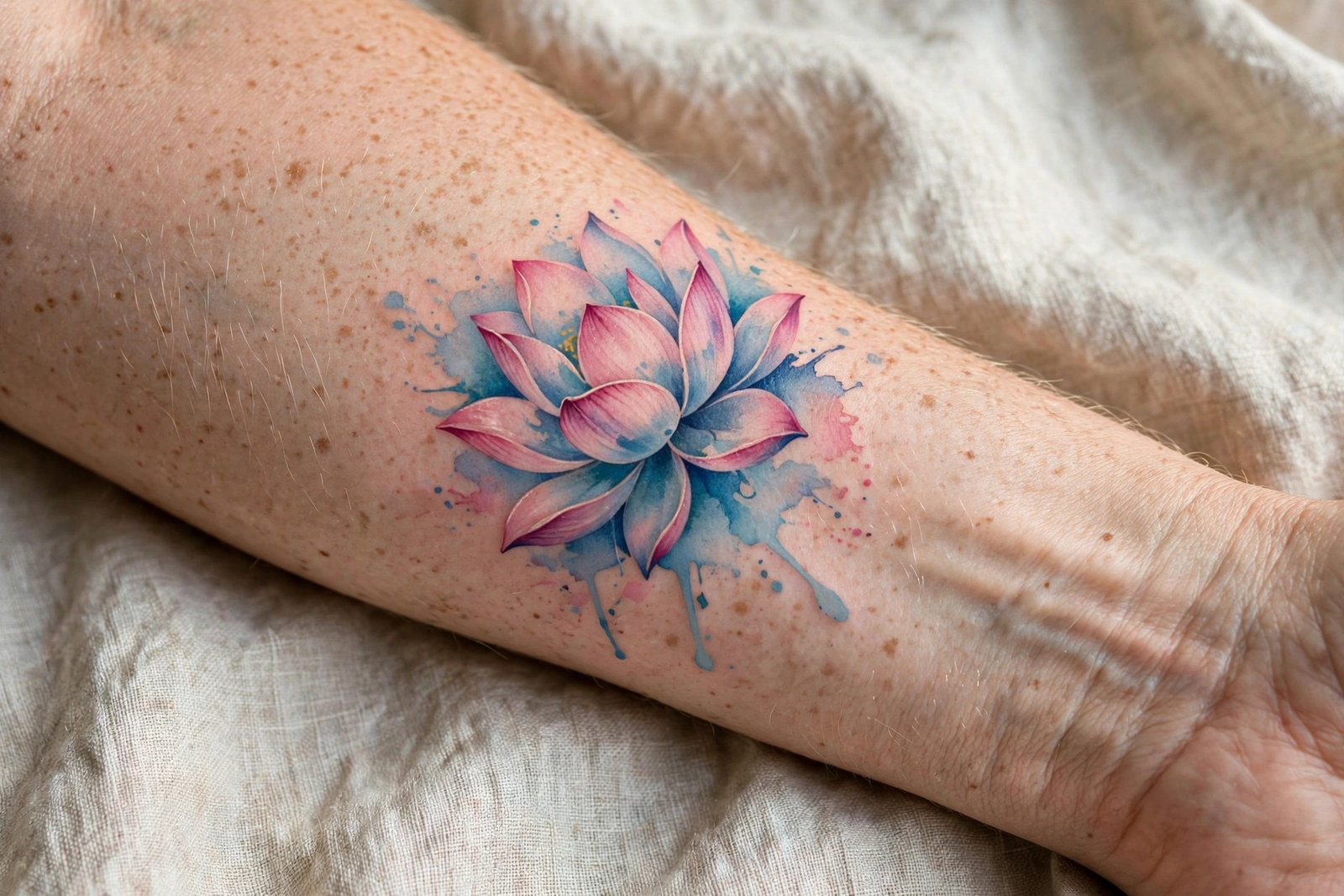
Watercolour: soft, colourful, painterly
Watercolour lotuses — soft washes of colour, no harsh outlines, like a painting on skin — are beautiful and very popular for pink and blue lotuses. They suit people who want colour without the boldness of traditional style. The honest trade-off is fading: watercolour tattoos, with their light washes and lack of strong outlines, fade faster than other styles, and they need sunscreen and touch-ups to stay vibrant. If you love the look, go for it — just go in with your eyes open, and budget for maintenance.
Traditional and Japanese: bold, storied, large
Traditional lotuses — thick outlines, bold colours, that classic flash-sheet look — have been done for decades, and they age beautifully. Japanese lotuses, flowing with water and koi, want room and reward it. Both styles suit people who like tattoo history and who are not afraid of a piece that is clearly, unapologetically a tattoo. A traditional lotus does not pretend to be a botanical illustration. It is a tattoo, and it is proud of it.
Best Placements for a Lotus Tattoo
Sternum and chest: symmetry’s natural home
The sternum is the lotus’s natural home, for the same reason it suits a moth: the body’s centre line mirrors the flower’s symmetry, so a centred lotus here looks like it was designed for the spot. Pain is around 6/10 — the bone is close to the surface and the skin is thin — but wearers say it is worth it, every time. Just know that sternum pieces are hard to hide in summer, and that a sternum lotus is a commitment to symmetry. If your lotus is even slightly off-centre, you will notice it every day. Make sure your artist measures, marks, and lets you check in a mirror before they start.
Forearm: visible, versatile, easy to grow
The forearm is the most versatile lotus placement. Visible enough to show, easy enough to cover, gentle on pain at around 3/10, and easy to add to later — a moon above, water below, a second flower beside it. Forearms grow well, and a lotus is a good seed for a larger piece. If you are not sure where to put your first lotus, the forearm is the safe, good choice. There is a reason it is popular. Popular is not always a criticism.
Back and shoulder blade: the big canvas
The back gives a lotus room to be large, which is what mandalas and full-bloom lotuses want. A large lotus across a shoulder blade, or a mandala lotus in the centre of the back, is a striking piece, and pain on the shoulder blade is gentle at 3–4/10. The upper back is also one of the best spots for a lotus you want to keep mostly private — visible in summer, hidden at work, entirely yours in between. Back pieces take longer, and large mandalas may need multiple sessions. That is normal. Patience is part of the design.
Wrist and ankle: small, private, daily
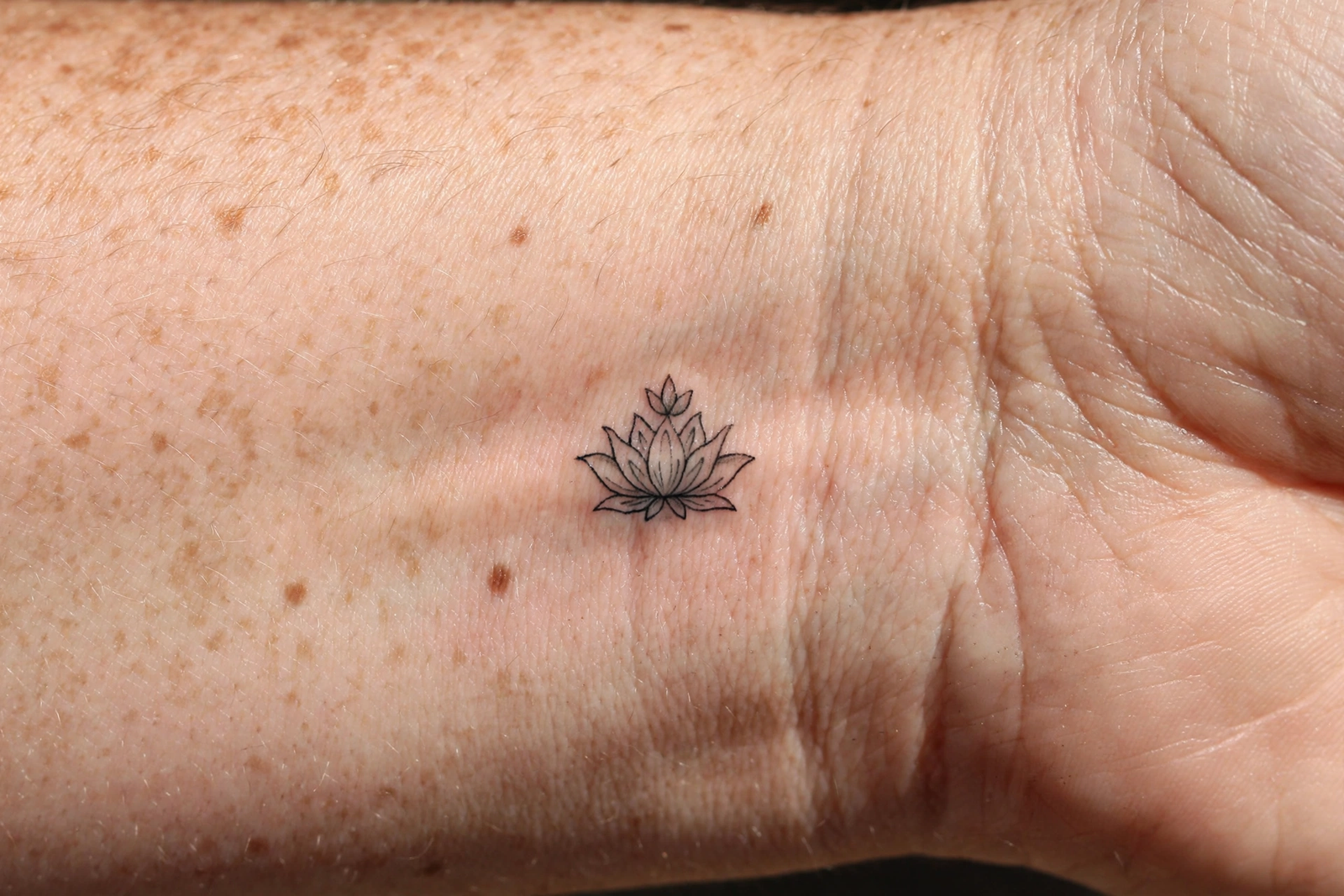
A small lotus on the inner wrist or ankle is a private tattoo — a daily reminder you can glance at, and cover with a watch when you need to. Pain is around 3/10. Keep it simple at this size: a tiny lotus with intricate petal detail will blur within a few years, and no amount of wishing will stop that. Simple, bold, a little larger than you first imagined — that is the formula for a small lotus that lasts. And honestly, a small lotus that stays crisp beats a detailed one that turns into a smudge. Every time.
Thigh: room, gentleness, privacy
Thighs give a lotus room for detail, with the gentlest pain of any large placement (2–3/10) and easy concealment. Thigh lotuses also age well, because the skin there moves less and sees less sun than arms do. If you want a large, detailed lotus — a mandala, a lotus in water with roots, a lotus with a koi — start here. The thigh is the underrated hero of tattoo placements, and lotus wearers who choose it rarely regret it.
Spine and back of the neck: vertical, elegant, symbolic
A small lotus on the back of the neck, or a vertical line of lotuses down the spine, suits the flower’s symbolism beautifully — growth rising, the path unfolding upward. Pain on the neck is moderate (4–5/10), and on the spine higher (6/10), but the result is elegant and distinctive. A neck lotus is also a visible commitment — it is hard to hide, even with long hair, so be sure before you book it. A spine lotus, by contrast, is mostly private, revealed when you choose to reveal it.
Size, Cost and Pain — Honestly
Small (3–6 cm): wrist, ankle, behind the ear. Simple lotuses only — fine-line or minimal blackwork. Cost: roughly $80–$150 in the US, often the shop minimum.
Medium (8–15 cm): forearm, shoulder blade, sternum. Room for a lotus with shading, a lotus and unalome, or a lotus with a moon. Cost: roughly $150–$400.
Large (15 cm+): back, thigh, full mandala. Detailed mandalas, lotus and koi scenes, large watercolour pieces. Cost: roughly $400–$1,000+, depending on the artist and the hours. A large mandala lotus can take multiple sessions, and it is worth budgeting for that rather than rushing it into one long, miserable sitting.
Pain follows the usual map: bony spots (sternum, spine, ankle) sting more; padded spots (thigh, outer arm) are gentler. Lotus tattoos have one pain advantage: most of the work is line and soft shading, not packed solid black, unless you go full blackwork. Sessions are usually shorter than you would expect for the size, and the symmetry of a lotus means the artist will spend time measuring and marking before they start — time that is well spent, even if it feels like waiting. Let them measure. Twice, if they want to.
Choosing an Artist for a Lotus
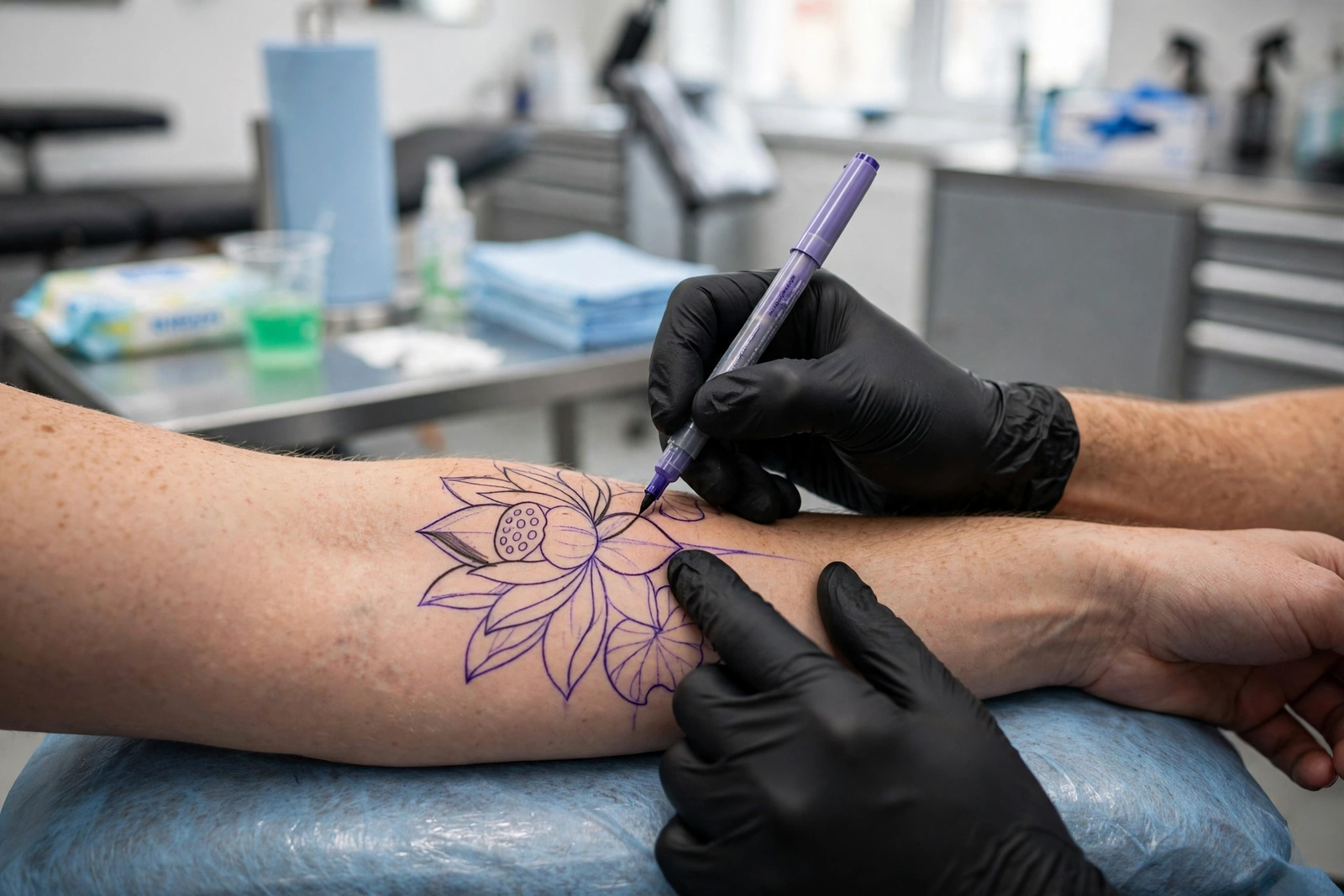
Lotuses punish sloppy symmetry. The petals are supposed to balance, the mandala is supposed to be even, and the eye notices instantly when it is not, even if it cannot say why. So look at healed work, not just fresh photos. Ask to see a healed lotus specifically — how the petals held up, whether the fine lines stayed crisp, whether the mandala is still even. A good artist will have one to show you. If they only show fresh work, ask why. It is a fair question, and a good artist will not mind it.
Bring reference photos of real lotuses, not just other people’s tattoos. The petal shape, the way the flower opens, the difference between a bud and a bloom — getting the flower right is what separates a lotus tattoo from a generic flower with ambition. Our tattoo ideas library and placements guide can help you narrow the style and spot before you book, and our tattoo styles guide is worth a read if you are torn between fine-line, blackwork and watercolour.
Aftercare in Brief
Wash gently twice a day, moisturise thinly (thin — greasy is not better), do not pick the flakes, and keep it out of pools and direct sun while it peels. Lotus petals show fading faster than bold traditional work, especially watercolour, so sunscreen after healing is not optional — it is the difference between crisp petals and a pale smudge in five years. The full day-by-day routine is in our tattoo aftercare guide. One lotus-specific note: sternum and spine lotuses cross skin that moves and stretches a lot, so be extra careful about bending, twisting and tight clothing in the first two weeks. Your lotus will thank you by staying symmetrical.
Lotus Tattoo vs Other Flower Tattoos
Frequently Asked Questions
What does a lotus tattoo mean?
Purity, rebirth and strength — beauty that rises clean from muddy water. It can also mean enlightenment, spiritual growth and resilience, depending on the colour and the tradition behind it.
What does a white lotus tattoo mean?
Purity of mind and spirit, peace and spiritual perfection. It is the lotus most associated with the Buddha, and it represents purity that was earned, not sheltered.
What does a pink lotus tattoo mean?
Enlightenment, devotion and the Buddha’s flower. Pink is the classic lotus colour, and it represents the highest spiritual aspiration and a heart that is opening.
What does a lotus and unalome tattoo mean?
The path to enlightenment, drawn out: confusion and struggle at the start, straightening out, and blooming at the end. The lotus at the top is the arrival.
Is a lotus tattoo only for Buddhists?
No. The lotus appears in Hinduism, Egyptian tradition, Chinese and Japanese culture, and in modern secular use as a symbol of resilience and new beginnings. If you are borrowing from a specific tradition, though, do it with respect and get the details right.
Where is the best placement for a lotus tattoo?
The sternum for symmetry, the forearm for versatility, the back or thigh for large mandalas, and the wrist or ankle for a small private lotus. Match the size to the spot — detailed lotuses need room.
How much does a lotus tattoo cost?
Small lotuses run about $80–$150 in the US; medium pieces $150–$400; large mandalas or detailed work $400–$1,000 or more, depending on the artist and the sessions.
Does a lotus tattoo hurt?
It depends on the spot. Thigh and outer forearm are gentle (2–3/10); sternum and spine sting more (5–6/10). Most lotus work is line and soft shading, so sessions are usually manageable.
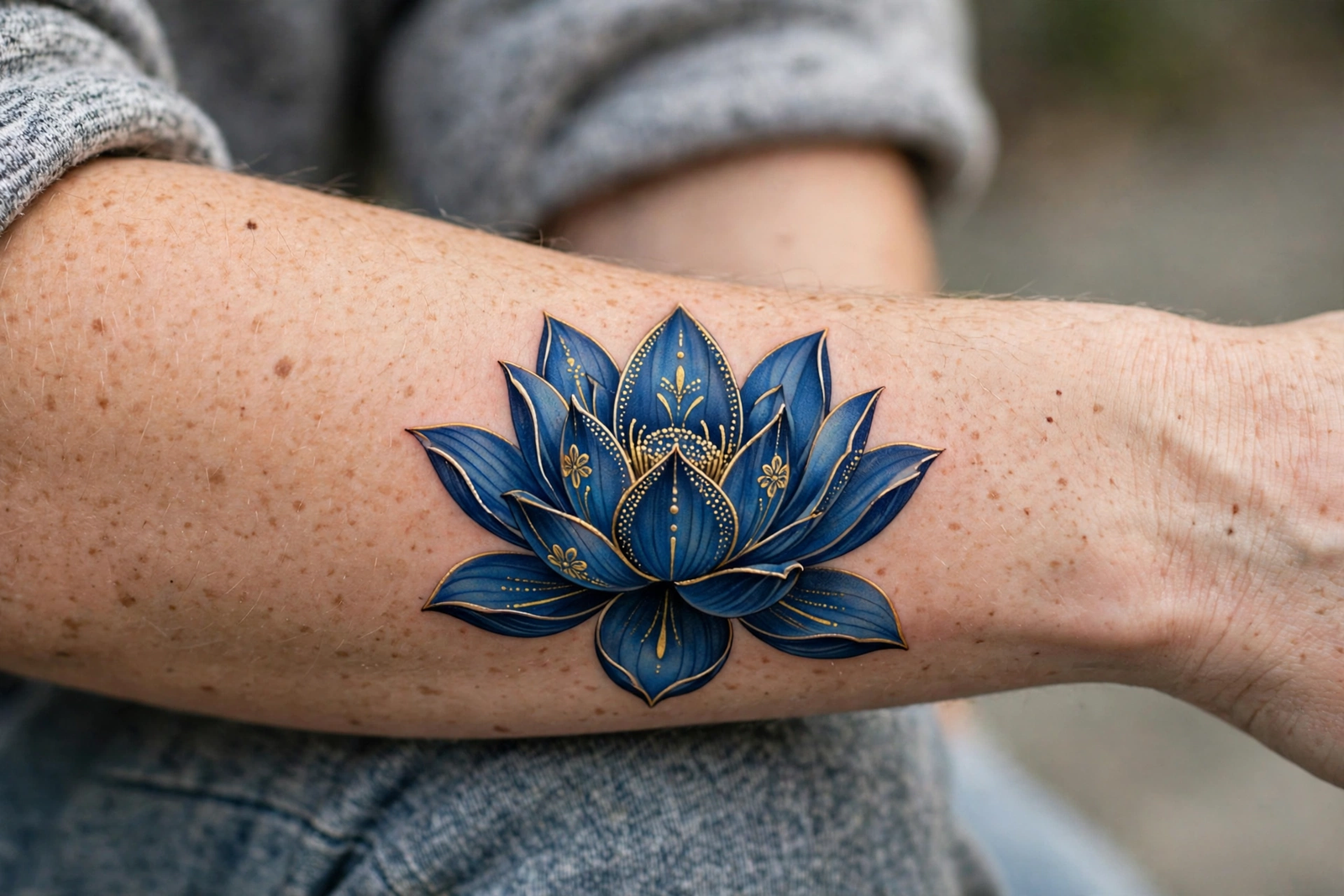
Mud, and Then This
I keep coming back to my friend’s tattoo, because it taught me what a lotus actually is. It is not a flower for people who have had easy lives. It is a flower for people who have had muddy ones, and who decided — quietly, without a speech, without applause — that the mud would not be the last word. She did not get a lotus because she liked flowers. She got it because she had a key to a flat that was hers, and she wanted to remember the moment she stopped living in someone else’s chaos and started living in her own calm. That is a small moment, in the grand scheme of things. It is also everything.
If that feels true for you, then pick your lotus like you mean it. Pick the colour that matches your story, not just the one that looks prettiest on a screen. Pick the stage — bud, half-open, full bloom — that matches where you actually are. Give it room, find an artist whose healed lotuses you would trust with symmetry, and live with the design for two weeks before you book. Then wear it the way a lotus wears its own bloom: clean, open, and entirely unbothered by the mud it came from.
Browse our tattoo meanings library for more symbols with stories behind them, or start with our tattoo ideas if you are still deciding which lotus is yours.